Do You Need Electric Brakes to Tow a Caravan?

Whether you need electric brakes to tow a caravan depends mainly on the caravan’s weight and the type of braking system fitted. Smaller trailers can be legally towed without brakes, while heavier caravans require their own braking system to help control the additional load. Electric brakes are commonly used on larger caravans because they can be operated from the tow vehicle and adjusted to suit the towing setup.

If you are buying a caravan, changing tow vehicles or setting up a new towing combination, the braking requirements should be checked before the vehicle is put on the road. Depending on the caravan’s weight, the setup may also require a brake controller and breakaway system, along with the correct electric brake installation and wiring on the tow vehicle. Getting those components matched properly gives the driver more predictable braking and helps the caravan comply with the requirements that apply to its weight.
Do All Caravans Need Brakes?

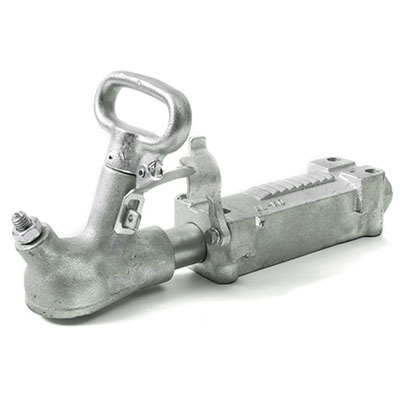
Not every caravan needs its own braking system. In Queensland, trailers with a GTM of up to 750 kg do not require brakes, while trailers above that weight must be fitted with an efficient braking system. For trailers over 750 kg and up to 2,000 kg GTM, that system can be either override or electric, so electric brakes are not automatically compulsory simply because the trailer exceeds 750 kg.

The requirements become stricter once the trailer exceeds 2,000 kg GTM. At that point, brakes must operate on all wheels and the system must apply automatically if the trailer becomes detached from the tow vehicle. That is where a compliant breakaway system becomes part of the setup.

Queensland towing requirements: Queensland Government – Towing vehicles and trailers

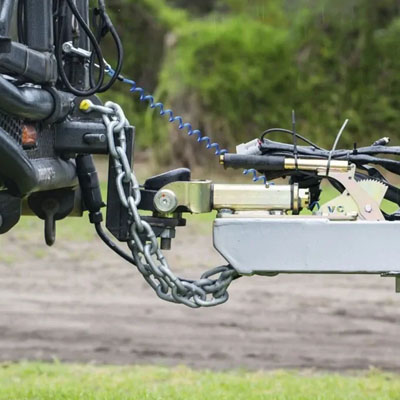
Do You Need Electric Brakes to Tow a Caravan - Override brake system

When Electric Brakes Make Sense for a Caravan

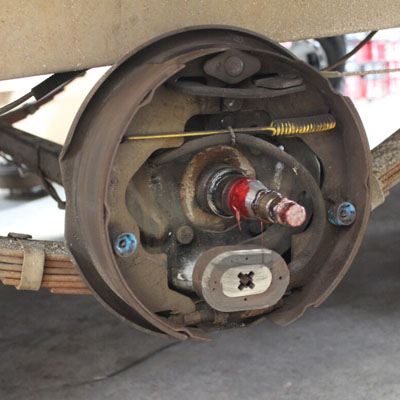
Electric brakes are commonly used on caravans because they allow braking force at the trailer to be controlled from the tow vehicle. This becomes increasingly useful as caravan weight increases, giving the driver more control over how strongly the caravan brakes respond and helping the tow vehicle manage the additional load during normal stops, downhill sections and sudden braking.

They also allow the braking response to be adjusted through a caravan brake controller, which can be set to suit the caravan and towing conditions. While electric brakes are not the only compliant option for every caravan weight range, they are a practical choice for many larger towing setups and are widely used where controlled trailer braking is needed.

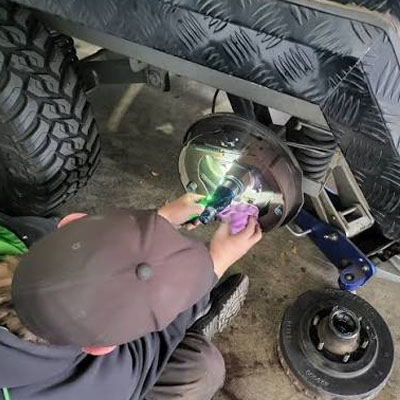
Do You Need Electric Brakes to Tow a Caravan - Electric brakes

What Does the Brake Controller Do?

A brake controller manages the braking signal sent from the tow vehicle to the caravan’s electric brakes. When the driver applies the vehicle brakes, the controller tells the caravan brakes how strongly to respond, helping the trailer slow in a more controlled way rather than relying on the tow vehicle alone. The amount of braking can usually be adjusted to suit the caravan weight, road conditions and how the combination feels under braking.

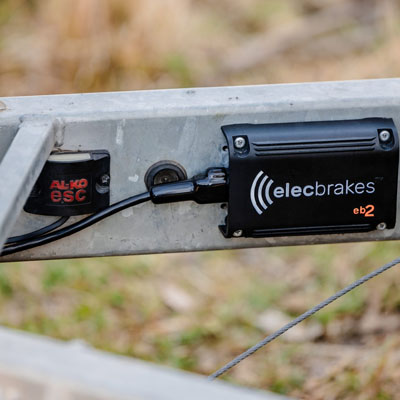
The controller also needs to be matched with the vehicle wiring and caravan brake system so the signal is delivered consistently. A proper electric brake controller installation includes the controller itself, the required wiring and the connection through to the trailer plug. If the controller is poorly set up or the wiring has a fault, braking performance at the caravan can become weak, inconsistent or delayed.

Do You Need Electric Brakes to Tow a Caravan - Electric brake controller

What Is a Breakaway System?

A breakaway system is designed to apply the caravan’s brakes automatically if it becomes separated from the tow vehicle. On trailers over 2,000 kg GTM, Queensland requirements state that the brakes must activate quickly after a breakaway and remain applied for at least 15 minutes.

The system normally uses its own power source so the caravan brakes can still operate after the electrical connection to the tow vehicle has been lost. For larger caravans, the breakaway system forms an important part of the overall braking setup alongside the electric brakes, controller and vehicle-side wiring.

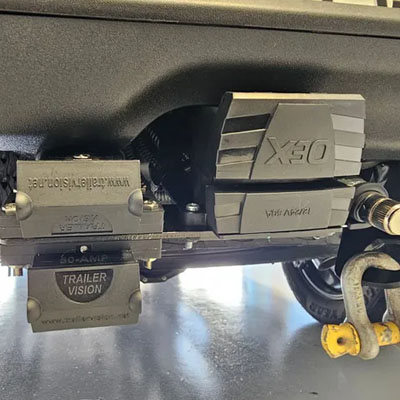
Do You Need Electric Brakes to Tow a Caravan - Breakaway system

Check the Tow Vehicle Before You Hook Up

The caravan braking system still depends on the tow vehicle having the right electrical setup to control it properly. That includes a compatible brake controller, suitable wiring, the correct trailer plug connection and a stable power supply. If any part of that vehicle-side setup is damaged or poorly connected, the caravan brakes may respond inconsistently even when the brake hardware on the trailer itself is in good condition.

This is where trailer wiring and damaged or corroded wiring become important to check, particularly on older towing setups or vehicles that have had accessories added over time. Loose terminals, worn connectors or previous wiring changes can affect the brake signal between the tow vehicle and caravan, so the complete circuit should be inspected before assuming the controller or caravan brakes are at fault.

Do You Need Electric Brakes to Tow a Caravan - Tow vehicle setup

Auto Electrical Checks for Caravan Brake Systems

A caravan brake setup should be checked when the controller is not responding properly, braking feels inconsistent or the system has been moved to a different tow vehicle. Older wiring, previous modifications and trailer plug changes can also affect how reliably the brake signal reaches the caravan, particularly if the system has been added to over time rather than installed as one complete setup.

A trusted auto electrician can test the controller, vehicle wiring, trailer connection and brake signal to confirm that the system is operating as intended. This is also worthwhile when fitting a new caravan, upgrading the tow vehicle or replacing an older controller, because the full electrical setup needs to work together for the brakes to respond consistently.

Do You Need Electric Brakes to Tow a Caravan - Auto electrical check

Get Your Caravan Braking Setup Checked Properly

If you are fitting electric brakes, changing tow vehicles or having trouble with an existing controller, the full setup needs to work together correctly. Bashi’s Auto Electrical can check the brake controller, trailer wiring, power supply and vehicle-side connections to make sure the caravan braking system is operating reliably.

We provide caravan and towing auto electrical work across Brisbane, Moreton Bay and the Sunshine Coast. Call 07 5495 7333 or click here to contact us online to arrange electric brake and caravan electrical work.

FAQ: Electric Brakes & Towing Requirements

Not always. In Queensland, trailers over 750 kg GTM need an efficient braking system, but electric brakes are not the only option up to 2,000 kg GTM. Override brakes may also be suitable within that weight range, depending on the trailer setup.

Yes. Electric caravan brakes need a compatible brake controller in the tow vehicle so the braking force can be applied and adjusted properly. The controller also needs to be wired correctly through to the trailer connection.

Once a trailer exceeds 2,000 kg GTM, the braking requirements become stricter. The brakes must operate on all wheels, be controllable from the driver’s normal driving position and include a breakaway system that applies the brakes automatically if the trailer becomes detached.

A breakaway system applies the caravan brakes automatically if the caravan separates from the tow vehicle. It uses its own power source so the brakes can still operate even after the main electrical connection to the tow vehicle is lost.

Yes. An auto electrician can install the brake controller, connect the required wiring and test the vehicle-side setup so the caravan brakes receive a consistent signal. They can also check existing trailer plugs, wiring and power connections if the braking system is not operating properly.