What Are the Signs of Corroded or Damaged Car Wiring?

Corroded or damaged wiring can affect the way electrical systems throughout a vehicle operate. Sometimes the result is a complete loss of power to one component, while other wiring problems cause lights, accessories or other systems to behave inconsistently. The symptoms depend largely on where the damage has developed and how badly the connection has deteriorated.

Corrosion, damaged insulation or weakened connections can also create an intermittent electrical fault that comes and goes rather than failing completely. If a vehicle develops recurring electrical problems without an obvious failed component, corroded or damaged car wiring may need to be checked as part of the diagnosis.
What Corrosion and Wiring Damage Do to a Circuit

Vehicle wiring relies on clean, secure connections to carry power where it is needed. Corrosion can build resistance at terminals and connectors, while damaged insulation or partially broken wires can interrupt the flow of current altogether. Depending on the extent of the damage, a circuit may stop working completely or continue operating with reduced or inconsistent power.

Physical damage can create different problems again. Wiring that rubs against metal may eventually expose the conductor and create a short circuit, while stretched or weakened wires can lose contact as the vehicle moves. These faults can affect anything from lighting and accessories through to starting and charging systems.

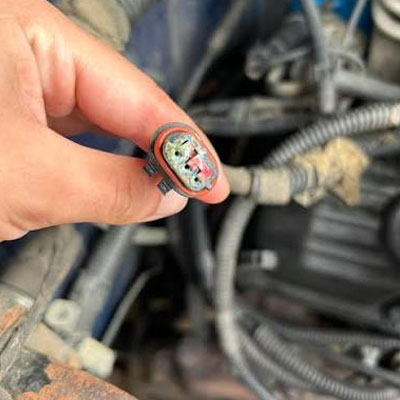
Signs of Corroded or Damaged Car Wiring - Corroded connector

Signs the Wiring May Be Damaged or Corroded

Wiring faults can affect different systems depending on where the damage has developed, but there are some recurring signs that point back to the condition of the circuit rather than a single failed component. Problems may be constant or may appear only when the vehicle is moving, the weather changes or electrical demand increases.

Common signs include:

  • Lights or accessories cutting in and out
  • Starting problems that come and go
  • Repeated blown fuses
  • Electrical systems losing power intermittently
  • Visible corrosion around terminals or connectors
  • Damaged, cracked or exposed wiring
  • A burning smell near wiring, plugs or electrical components
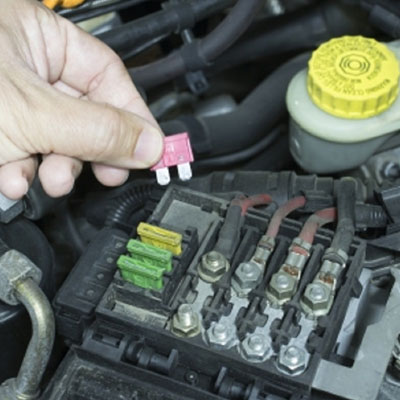
Signs of Corroded or Damaged Car Wiring - Blown fuse

Any one of these symptoms can have more than one possible cause, but repeated issues across the same circuit are a good reason to inspect the wiring and connections closely. Corrosion, poor terminals and damaged insulation can all allow a fault to keep returning even after an affected accessory or fuse has been replaced.

Where Wiring Problems Commonly Develop

Vehicle wiring is exposed to different conditions depending on where it runs, which makes some areas more prone to corrosion and physical damage than others. Engine bay wiring deals with heat, vibration and moisture, while wiring beneath the vehicle can be exposed to water, dirt and road debris. Door looms and wiring around hinges also move repeatedly, which can eventually weaken individual wires or damage the insulation.

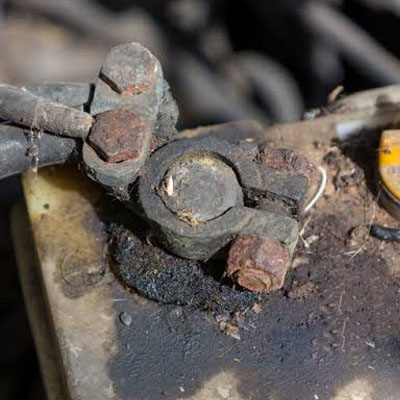
Connections around batteries, fuse boxes, trailer plugs and aftermarket accessories can also develop corrosion or loose terminals over time. Previous electrical work is another area worth checking, particularly where wiring has been joined, extended or routed close to moving or hot components. These locations do not automatically indicate a fault, but they are common places for car wiring damage and electrical connection corrosion to develop.

Signs of Corroded or Damaged Car Wiring - Battery terminal corrosion

Why Corrosion Can Create Intermittent Electrical Faults

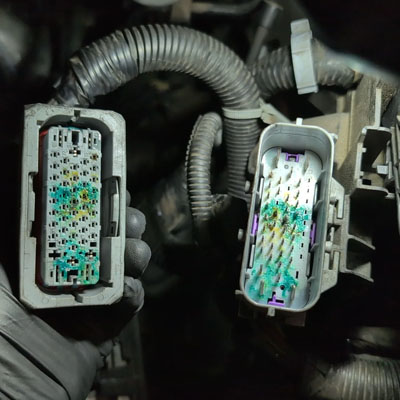
Corrosion does not always stop a circuit from working completely. A terminal or connector may still pass enough current for a light, accessory or other electrical component to operate, then lose that connection as vibration, moisture or temperature changes affect the contact point. This can create an intermittent electrical fault where the same system works normally at one moment and cuts out the next.

As corrosion becomes heavier, resistance through the connection can increase and the electrical supply may become less reliable under load. Cleaning or moving the connector may temporarily improve contact, but the problem can return if the terminal, wire or connector has already deteriorated. Proper inspection of the affected connection is needed to determine whether it can be repaired or should be replaced.

Signs of Corroded or Damaged Car Wiring - Corroded wiring connectors

When Damaged Wiring Starts Blowing Fuses or Creating Heat

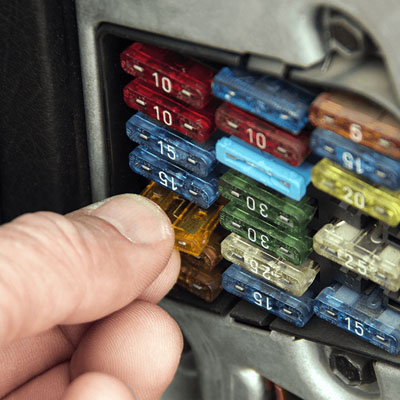
Damaged wiring can become more serious when exposed conductors begin contacting metal or a weakened connection starts generating excess heat. If a wire shorts to ground, the circuit may keep blowing the same fuse each time power is restored. In other cases, resistance at a loose or corroded terminal can allow heat to build gradually without causing an immediate fuse failure.

That heat can damage insulation, soften connector housings and create a noticeable burning smell around the affected wiring. Replacing the fuse or reconnecting the circuit without repairing the wiring fault can allow the same problem to return. The damaged section, terminal or connector needs to be identified and repaired before the circuit is put back into normal use.

Signs of Corroded or Damaged Car Wiring - Fusebox

When the Wiring Needs Auto Electrical Testing

Wiring should be tested when electrical faults keep returning, visible corrosion has developed around important connections or damaged insulation exposes the conductors underneath. Testing is also worthwhile when several components on the same circuit behave inconsistently, particularly if replacing a fuse or accessory has not solved the problem. At that point, the condition of the wiring and connections needs to be checked rather than continuing to replace individual parts.

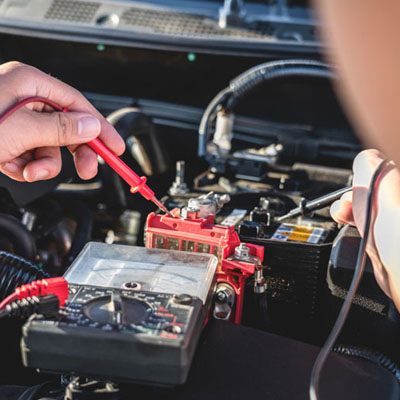
A trusted auto electrician can inspect the affected circuit, test voltage and continuity and locate damaged sections that may be hidden behind trim, inside looms or around connectors. This makes it possible to repair the actual car wiring fault rather than relying on temporary fixes. Once the damaged or corroded section has been identified, the circuit can be repaired and tested before being returned to normal use.

Signs of Corroded or Damaged Car Wiring - Auto electrical testing

Get Corroded or Damaged Wiring Checked Properly

Corroded or damaged wiring can affect anything from accessories and lighting through to starting and charging systems, and the fault may continue to return until the damaged section is repaired. Bashi’s Auto Electrical can inspect vehicle wiring, test affected circuits and repair corroded connections, damaged looms and other electrical faults.

Call 07 5495 7333 or click here to contact us online for auto electrical fault diagnosis across Brisbane, Moreton Bay and the Sunshine Coast.

Frequently Asked Questions

Common signs include lights or accessories cutting in and out, repeated blown fuses, intermittent starting problems and electrical systems that lose power unexpectedly. Visible corrosion, cracked insulation or exposed wiring can also indicate that the circuit needs attention.

Yes. Corrosion can increase resistance at a terminal or connector while the circuit continues to operate. This may cause voltage drop, intermittent operation or heat to build around the affected connection without the wire failing completely.

Partially broken wires, loose terminals and corroded connections can make and lose contact as the vehicle moves, heats up or vibrates. This is why an intermittent wiring fault may disappear while the vehicle is stationary and return again while driving.

Yes. If damaged insulation allows a conductor to contact the vehicle body or another wire, the resulting short circuit can repeatedly blow the fuse protecting that circuit. The damaged wiring needs to be repaired before another fuse is fitted and the circuit returned to normal use.

Yes. An auto electrician can test the affected circuit, locate damaged wiring or corroded connections and determine whether individual terminals, connectors or sections of the loom need repair or replacement.