4WD Solar Panels: Choosing the Right Setup for Your Vehicle

Adding solar to a 4WD can make it much easier to keep an auxiliary battery charged while camping, touring or spending longer periods away from mains power. The right 4WD solar panels can help support a fridge, lighting, device charging and other 12V accessories, but the panel itself is only one part of the system. Battery capacity, daily power use, charging equipment and available roof or storage space all affect what will work properly.

A good 4WD solar setup should be planned around how the vehicle is actually used rather than choosing a panel based on wattage alone. A weekend setup running a fridge and a few lights will have very different requirements from a touring vehicle supporting multiple accessories for several days at a time. Looking at the full power system first makes it easier to choose solar that complements the battery and charging setup instead of becoming an isolated add-on.
What Does Solar Actually Do in a 4WD Setup?

Solar does not usually power your fridge and accessories directly. The panels collect energy from the sun and feed it through a regulator or DC-DC charger into the auxiliary battery, where that energy is stored until the vehicle’s 12V equipment needs it. In practical terms, the solar system helps replace the power being used while the vehicle is parked and reduces how quickly the auxiliary battery is drawn down.

That makes solar most useful as part of the wider charging system rather than as a standalone addition. The alternator may recharge the auxiliary battery while driving, while the 4WD solar setup continues supplying charge when the vehicle is stopped at camp. How well those charging sources work together depends on the battery type, charger capacity, panel output and the amount of power being used each day.

4WD Solar Panels: Choosing the Right Setup for Your Vehicle - 4WD solar setup

How Much Solar Does a 4WD Need?

There is no single panel size that suits every 4WD because the right amount of solar depends on how much power the setup uses each day and how much of that energy needs to be replaced while the vehicle is parked. A fridge, lighting, device charging and other accessories all contribute to daily consumption, while battery capacity determines how much reserve is available between charging periods.

The amount of solar required also changes with how the vehicle is used. A 4WD that is driven every day may rely on alternator charging for much of its recovery, while a vehicle parked at camp for several days will depend more heavily on solar input. Available sunlight, panel orientation and weather conditions also affect how much energy the system can realistically produce.

Rather than choosing a panel based on wattage alone, the solar setup for a 4WD should be sized around the full power system. That means considering the battery, charging equipment and expected accessory load together so the solar input can replace a useful portion of the energy being consumed.

Fixed Solar Panels or Portable Solar?

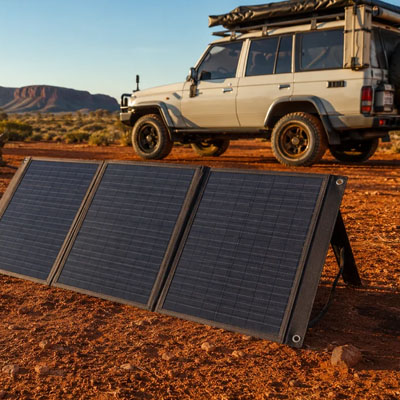
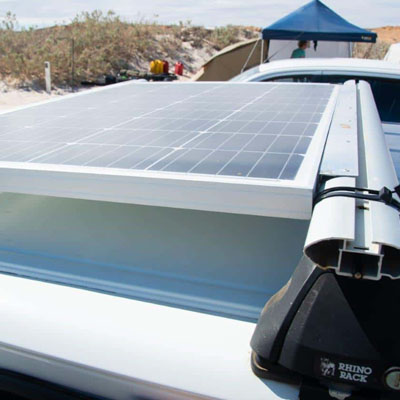
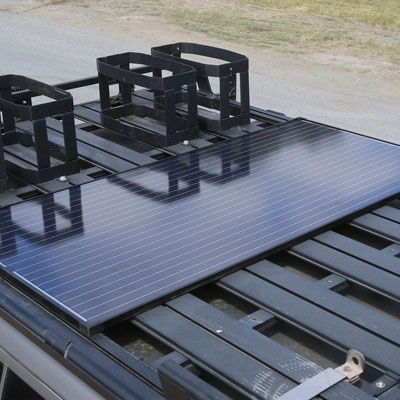
Both fixed and portable solar can work well in a 4WD setup, but they suit different ways of travelling. Fixed panels are mounted permanently to the vehicle or canopy, so they are always ready to charge whenever there is sunlight. Portable panels or solar blankets can be moved away from the vehicle and positioned more directly toward the sun, which can be useful when the 4WD is parked in shade.

Fixed Solar Panels

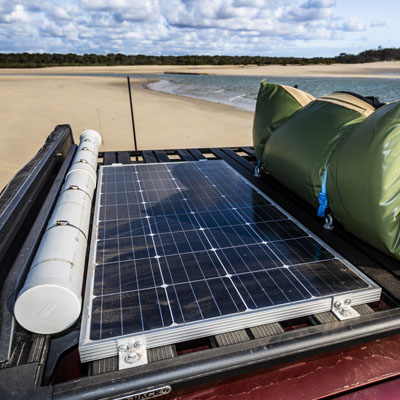
Fixed panels are a good fit for touring setups where regular charging without extra setup is important. They can continue contributing power whenever the vehicle is exposed to sunlight and do not take up storage space inside the 4WD. The main limitation is available roof or canopy space, and output can drop if the vehicle is parked under trees or the panel cannot be positioned toward stronger sunlight.

Portable Solar Panels and Blankets

Portable panels and solar blankets for 4WDs offer more flexibility because they can be moved to a sunnier position while the vehicle remains shaded. They are also useful for supplementing an existing fixed system when additional solar input is needed. The trade-off is that they need to be unpacked, positioned and stored each time they are used.

For many touring vehicles, the best option is not necessarily choosing one or the other. A smaller fixed system can provide regular background charging, while portable solar can be added when the vehicle is parked for longer periods or daily power use is higher.

4WD Solar Panels: Choosing the Right Setup for Your Vehicle - Fixed solar panels
4WD Solar Panels: Choosing the Right Setup for Your Vehicle - Portable solar panels

Solar Needs to Work With the Battery System

Solar works best when it is planned as part of the wider 4WD power setup rather than treated as a standalone addition. The panel output, auxiliary battery capacity, battery type and charging equipment all need to suit each other so the system can accept and store the available solar energy efficiently. If one part of the setup is undersized or poorly matched, adding more panel capacity does not necessarily solve the underlying limitation.

This is especially important with a dual battery system, where solar may be working alongside alternator charging through a DC-DC charger or regulator. Lithium and AGM batteries can also have different charging requirements, so the equipment needs to be suitable for the battery being used. Planning solar alongside the vehicle’s wider 4WD accessories makes it easier to account for the fridge, lighting and other loads that will actually be drawing power from the system.

Can Solar Run a Camping Fridge?

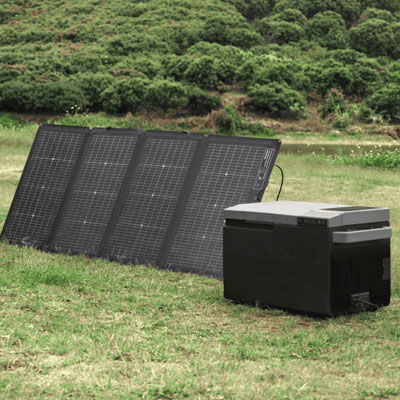
A camping fridge is one of the main loads a 4WD solar setup is expected to support, but the solar panels are usually replenishing the auxiliary battery rather than powering the fridge directly. The amount of solar needed depends on the fridge’s daily consumption, ambient temperature, how often it is opened and what other accessories are drawing power at the same time. A larger battery can provide more reserve, but the solar input still needs to replace enough of that used energy to keep the system sustainable over longer stops.

This is why a fixed wattage recommendation does not suit every vehicle. A fridge-only setup used for short trips may need far less solar than a touring 4WD running lighting, chargers and other 12V equipment alongside the fridge. The most reliable approach is to calculate the likely daily load first, then size the 4WD solar panels and battery capacity around how long the vehicle is expected to remain off-grid.

4WD Solar Panels: Choosing the Right Setup for Your Vehicle - Solar powered camping fridge

What Else Can a 4WD Solar Setup Power?

Once the fridge is accounted for, the rest of the system usually comes down to smaller 12V loads that add up across the day. Lighting, phones, tablets, UHF equipment and other camping accessories may not draw much individually, but they still contribute to the amount of energy the battery and solar system need to replace.

Common loads can include:

  • LED camp lighting around the vehicle or awning
  • Phones and tablets charged through USB or 12V outlets
  • UHF and communication equipment
  • Small 12V camping accessories such as pumps or fans
  • Accessory charging for cameras, torches and other portable gear

The more equipment that is added, the more important it becomes to size the 4WD solar setup around total daily consumption rather than one major appliance. A system that comfortably supports a fridge may still struggle if extra accessories are added later without allowing for the additional load.

Common Problems With Poorly Planned Solar Setups

A 4WD solar system can still struggle even when the panels themselves are working properly. Problems often appear when the panel capacity, battery size, charger or accessory load have not been planned as one complete system. Adding more equipment later can also upset a setup that originally worked well, particularly if the extra demand was never allowed for.

Common issues include:

  • Too little solar capacity to replace the power being used each day
  • An undersized battery that does not provide enough reserve for longer stops
  • An unsuitable regulator or DC-DC charger limiting how effectively solar input is used
  • Voltage drop from undersized wiring or poor connections
  • Extra accessories added without recalculating the total load
  • Relying on solar to compensate for an undersized power system

These problems can lead to low battery charge, accessories cutting out or slower recovery after the vehicle has been parked for a while. If the system starts behaving differently after new equipment is added, charging problems after accessory upgrades may be a sign that the original setup no longer matches the amount of power being used.

4WD Solar Panels: Choosing the Right Setup for Your Vehicle - 4WD setup

Setting Up Solar Around How You Use the 4WD

The right solar setup depends heavily on how the vehicle is actually used. A 4WD that moves every day can recover a large part of its battery use through alternator charging, while a vehicle parked at camp for several days needs enough solar input to replace much more of the daily load. A fridge-only touring setup will also have very different requirements from a vehicle running lighting, communications gear, charging devices and other accessories.

That is why a 4×4 solar panel setup should be planned around travel habits as much as equipment specifications. Weekend trips, long-distance touring and extended off-grid camping all place different demands on the battery and charging system. Matching the 4WD solar setup to those conditions gives the system a better chance of keeping up with daily power use without relying on oversized panels or unnecessary equipment.

Get the Right 4WD Solar Setup for Your Vehicle

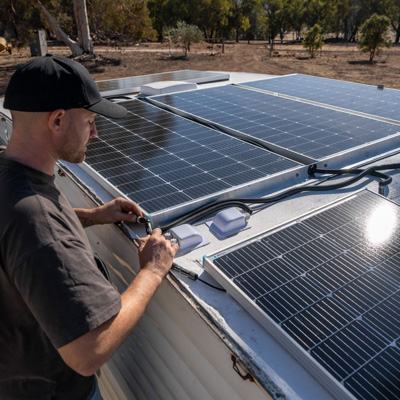
A 4WD solar system works best when the panels, battery, charging equipment and accessory load are planned together. Bashi’s Auto Electrical can assess how you use the vehicle, what equipment you need to support and how the solar input should work alongside alternator charging and the auxiliary battery.

Our trusted auto electricians can help with 4WD solar installation, battery charging systems and the wider electrical setup for touring and off-grid use across Brisbane, Moreton Bay and the Sunshine Coast. Call 07 5495 7333 or click here to contact us online to discuss the right setup for your vehicle.