Why Your Car AC Gets Warm When Stopped

You may notice the air conditioning blows cold while driving, yet becomes warm when you stop at traffic lights or sit parked with the engine running. As soon as the vehicle starts moving again, the cooling quickly returns. Because the system still works part of the time, it can be confusing and easy to dismiss as a minor quirk.

This pattern usually points to a condition that only appears when the vehicle is idling rather than a complete air conditioning failure. The cooling system relies on several supporting systems working together, and small changes in operating conditions at low speed can affect how well it performs. Recognising this behaviour early helps narrow the cause before the issue becomes constant.
What Changes When the Car Stops Moving

When the vehicle comes to a stop, several operating conditions change at the same time. Engine speed drops to idle, electrical output reduces, and natural airflow through the front of the vehicle almost disappears. Systems that previously relied on movement now depend entirely on controlled operation to maintain cooling performance.

At idle, electrical demand from interior fans, climate control, and other accessories remains steady while available output is lower than when driving. This places greater reliance on correctly operating cooling fans and stable control signals to keep temperatures regulated. If any part of that balance is disturbed, cooling efficiency can drop noticeably until the vehicle is moving again.

Why Your Car AC Gets Warm When Stopped

Electrical Systems That Control AC Cooling at Idle

Modern air conditioning relies on several electrically controlled systems working together to maintain cooling, especially when the vehicle is stationary. When airflow from driving is gone, these components must respond correctly to keep temperatures stable.

  • Cooling fans that move air through the condenser when the vehicle is not moving
  • Compressor clutch or control valve that regulates refrigerant flow at low engine speed
  • Pressure sensors that signal when additional cooling support is needed
  • Engine idle control that maintains stable engine operation under AC load
  • Control modules coordinating fan speed and compressor operation
Car air conditioning blowing warm air while idling at traffic lights

Because cooling depends on these systems reacting quickly and accurately, the air conditioning can still work while driving yet struggle at idle if signals or electrical response are not consistent.

Common Electrical Faults Behind Warm Air at Idle

When cooling drops only at idle, the cause is often a component that cannot respond correctly at low engine speed or reduced electrical output. The system may still operate while driving because higher RPM and airflow compensate, but the weakness becomes noticeable once the vehicle stops.

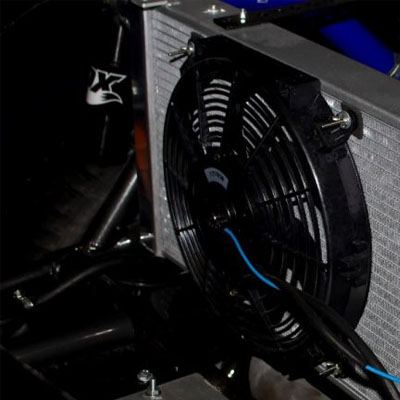
Cooling fans that fail to engage properly are a common cause. If the fan does not run at the required speed, heat cannot be removed from the condenser efficiently, which quickly reduces cooling performance. Weak relays, worn fan motors, or unstable power supply can all prevent the fan from operating as intended.

Low charging performance at idle can also affect the compressor and control signals. Voltage drop, ageing wiring connections, or marginal charging output may not stop the system completely, but they can prevent it from maintaining cooling when demand is highest. These faults often appear subtle because the system recovers once engine speed increases again.

Electrical fault causing AC to struggle at low engine speed

How the Problem Usually Gets Worse Over Time

At first, the air conditioning may only lose cooling when stopped for long periods. Over time, the warm air can begin appearing sooner, such as after short stops or in lighter traffic. Eventually, the system may struggle to cool consistently even while driving, especially on hot days.

As electrical components continue to weaken, cooling fans may respond slower and control signals become less stable. These early behaviours often sit alongside other subtle electrical changes, which many drivers dismiss until multiple systems begin showing symptoms. You can see similar patterns in our article on electrical warning signs you should never ignore, where small inconsistencies develop into more noticeable faults.

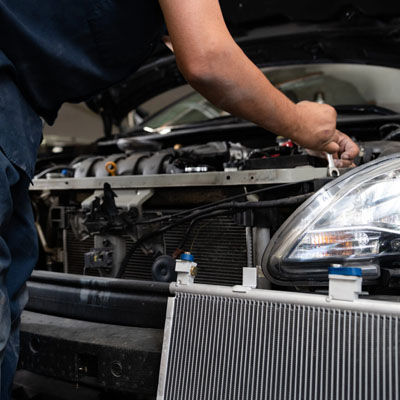
Cooling fan and condenser inspection for car AC warm air issue

When Warm Air at Idle Needs Checking

If the air conditioning repeatedly becomes warm whenever the vehicle is stopped, it is worth having the system checked before the issue progresses further. Behaviour that begins only in traffic can gradually affect everyday driving as electrical response continues to weaken. Early inspection can confirm whether cooling fans, charging stability, or control signals are no longer operating within normal range.

If the cabin takes much longer to cool at lights, cooling returns only while moving, or performance varies day to day, a targeted electrical check can identify the cause. Our team can assess fan operation, voltage behaviour, and control system response to determine what needs attention. For vehicles where cooling becomes unreliable in normal driving, our mobile auto electrical service can assist across Brisbane, Moreton Bay, and the Sunshine Coast. Call 07 5495 7333 to book, or click here to contact us online and arrange an inspection.

Auto electrician diagnosing car AC not cold when stationary

FAQ Car Air Conditioning Idle Issues FAQs

Not always. While refrigerant levels can affect performance, cooling that drops only when stopped often points to electrical control or fan operation issues.

Increased airflow and higher engine speed can temporarily compensate for weak fan performance or voltage instability.

Yes. Unstable voltage at low engine speed can affect fan operation, compressor control, and sensor communication.

In most vehicles, condenser or radiator fans should activate to maintain cooling efficiency at idle.

The vehicle may remain driveable, but ongoing electrical or cooling faults can worsen over time.

Prolonged overheating of condenser components or repeated voltage instability can lead to further wear and reduced system reliability.